Professor | Pastor | Wife | Mother | Worship Leader |Speaker
I am a no nonsense kind of woman who is passionate about helping others recognize the Kingdom ethics found in the teaching of Jesus and start living by them, without compromise.
Intercession is likely the most undervalued and neglected gift and spiritual discipline in the Christian walk for most believers. Yet the Spirit of God is alive and active, working in and through us, even when we don’t realize it.
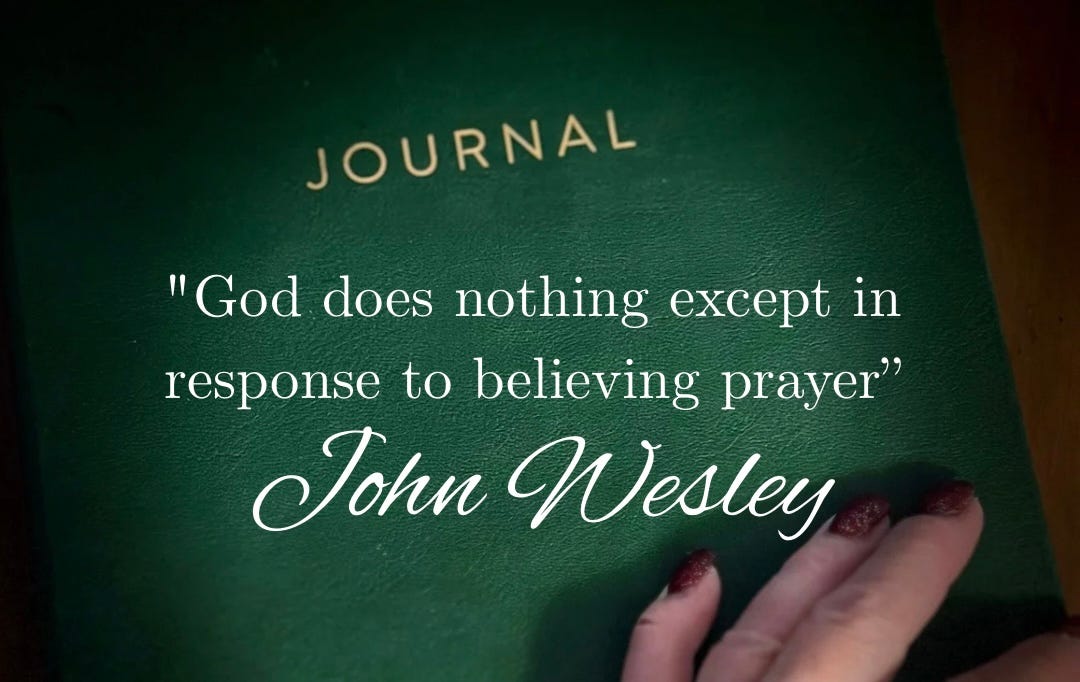
On this day in my journal in 2022, as I was thanking God for an answered prayer, He reminded me that it came through the intercession of others on my behalf. He showed me that somewhere, someone is praying for me—even if they don’t know my name. How humbling… how sobering.
I urge that supplications, prayers, intercessions, and thanksgivings be made for all people.
1 Timothy 2:1
Reflecting on this, I recalled one specific moment where the Lord stopped me in my tracks, calling me to intercede for someone I didn’t know. In 2008, my husband and I were visiting churches in Louisiana after getting married and moving to a new state. At one service, I saw a young man sitting nearby, and the Lord impressed on my heart to pray for him. I had no reason to know what he needed, but I prayed for him every day for a long time—and I still do whenever the Spirit brings him to mind.
The Spirit works like that. He has obedient vessels all over the world praying for His children and His purposes at all times. There is a supernatural confidence that comes when being led by the Spirit in intercession.
Likewise the Spirit helps us in our weakness. For we do not know what to pray for as we ought, but the Spirit himself intercedes for us with groanings too deep for words.
Romans 8:26
Perhaps intercession is one of the best ways we can love our neighbor. What a comfort to know that God is moving on our behalf, connecting believers to partner with His plans for our lives. Only the love of the Father moves for us in such a profound way.
In 2026, may we pay attention to God’s call when He asks us to step up on behalf of others, no matter who we are.
But to my friend who feels lonely today, let this story comfort you: someone, somewhere, is praying for you, too.
I hopped on Substack and WordPress to find a creative space to write, but lately, the algorithm has been giving me whiplash. My feed is bombarded with polarizing views on the “roles” of Christian women, and frankly, it’s exhausting.
I find it difficult to reconcile the entirety of Scripture and the history of the family in biblical times with a view that suggests we exhibit Christ by alienating or looking down on women whose lives don’t mirror our own.
The Paradox of “Unlearning”
I often see women writing about what they had to “unlearn” when they transitioned to staying at home. I find those stories fascinating, and if that is your story, I would love to hear more in the comments. However, my testimony is the exact opposite.
I had to “unlearn” the idea that a woman must stay at home to be a “good, godly” mother. What I had to learn, instead, is that obedience pleases the Father. Dying to self as a woman of God isn’t about a specific location; it’s about being obedient in whatever season you are called to—whether that is inside the home, in the workforce, or a mix of both.
My Story
To offer some context: I am a professor. I am fortunate that my career allows me to be home with my children for three months of the year. For the other nine months, I am a working mom who feels right in the center of God’s will.
In both seasons, the “fruit” is the same:
• My children are thriving.
• My marriage is healthy.
• My home is tended to and my family is fed.
• My spiritual life is vibrant.
During the three months I am home, very little changes. There is perhaps more “rest,” but my family thrives equally in both circumstances. Yet, the current social media landscape often tries to tell me that I am not thriving—that my choices are inherently selfish or unbiblical.
Can we just be honest?
• To the woman at home: You are amazing and faithful, and I see your sacrifice. But I invite you to ask: Are you being obedient to the Lord, or are you just doing what someone told you was the “godly” thing to do?
• To the woman in the 9-to-5: Your choice to provide and serve is beautiful and sacrificial. But ask yourself: Is your work an act of obedience, or a self-serving escape?
Obedience is always the play, sis! When I obey, I can find assurance in Scripture, my family thrives AND I thrive. Even on the hardest days, there is grace and I can confidently walk in it.
The Sacrifice of Mindfulness
I understand that writers feel called to specific niches. That is okay. But we must acknowledge that algorithms don’t “play nice”—they thrive on division.
Why can’t we be more thoughtful in how we approach the conversation of “roles”? We can properly embody Christ only when we leave room for those whose call to obedience looks different than ours. Our circumstances can vary wildly while still honoring the same Lord and the same Scripture.
Loving our neighbor doesn’t stop when we pull out our phones. We are called to honor our families, yes—but also to honor our sisters in the body of Christ. Every word we write carries the weight of accountability.
Women, we can do better. Myself included.
About the Author: Samantha is a professor, mother, pastor and writer dedicated passionate about spiritual formation and Biblical literacy. By examining the intersection of Scripture, history, and daily life, she seeks to help believers navigate the complexities of modern culture with biblical wisdom.
Have you ever thrown away things you should’ve treasured?
Just last week, the day after Christmas, I discovered eleven years of sacred conversations hidden in a cabinet in my office, and I almost discarded them. As I rummaged through my home office, thinking it was a typical “new year” clean-up, I pulled out old papers, bills, and other documents that no longer needed to be kept. Among the trash, I found several treasures we had tucked away in some drawers, but I’ll write more about that later. In one cabinet, I found several neatly stacked journals, and as I pulled them out to toss them into the large trash can to “turn a new leaf,” something urged me to stop. I selected one and began to read.
It’s heavy to realize that after eleven years of journaling, you’ve come so far—and yet, in some ways, you haven’t moved an inch.
As I sat there, shaking my head at some of the words I had written, still tempted to throw them away, I began to sense the Lord ministering to me and speaking through those pages, sometimes echoing the psalms of David from his time in the wilderness. It dawned on me that there may be parts of these journals the Lord might want to use to help someone else.
I understand that those of us who journal have different approaches. My journals are a chaotic collection of “all the things.” I tend to jot down ideas for sermons I might preach (though I rarely do) or books I want to write that I don’t seem to have time for. But I also record my conversations with the Lord. He always speaks to me when I seek Him, whether I am sitting in His presence with His Word before me in peace or in brokenness; when I call, He answers.
I am going to begin sharing some of my sacred exchanges with the Lord that I discovered deep within the pages of my many journals. God’s words to me are sacred, and while some words are just for me, I believe His words are worth sharing, and maybe God will use one or two of these simple words to encourage you in your own sacred exchange with your Heavenly Father.
Here is what you can expect as I share the words of my journal: Suffering is inevitable, oppression is defeatable, God’s will is discernible, gratitude is invaluable, and redemption is available.
Maybe it’s also time for you to find those old journals, pry open those dusty pages,and let the testimony of the Lord’s faithfulness cry out to you as you begin this next year.
We’ve mistaken sitting inside the walls of a “church” once a week as a guarantee of discipleship. True Christian discipleship involves conforming to the image of Christ, and I fear that many churches don’t actually know how those sitting in the seats on Sunday morning are actually doing in this area. While I certainly hope that the church you attend has elements that help you conform, what we see modeled in Scripture is more intimate than Sunday-morning services. It is also more intimate than small groups (which, if we are being honest, many small groups aren’t really small, and they are often just an extension of Sunday mornings – sorry, someone had to say it). I praise God for the churches that answer the call to provide for the needy, who make meals for those coming out of the hospital, and who help a young single mother find housing. However, let me ask you, who do you turn to when you’re drowning in depression and don’t see the light at the surface? Who do you turn to when you’re struggling to know how to love a family member who has turned away from God? Who do you turn to when you’ve “gone too far” with your significant other and need counsel on how to move forward and walk in freedom and forgiveness? While I certainly hope you CAN go to your pastor, what if you had individuals in your life (who likely go to your church) who walked with you daily? What if these people had fruit that looked like Jesus, and just by sitting with them, and having coffee with them, you, yourself, began to grow the same fruit? What if these people love you enough to sit with you in the ugly and celebrate with you in the victory? This sounds pretty great, huh? You would think. But – I’m going to shoot straight with you, most of us say we want it, but we don’t really pursue it. I write this statement fully aware that I am as guilty as the next person.
The reality is that phones and screens have replaced discipleship within the Christian community.
We don’t just sit with each other anymore. We don’t really pursue one another anymore. ChatGPT leads us to the answers to our pressing spiritual questions. Instagram and YouTube provide video after video of any length that meet our time constraints, with an algorithm offering instant insight to feed our need to be justified and right in our feelings and opinions on living, Biblical interpretation, or even political viewpoints. We can say what we want and avoid face-to-face confrontation. We can take in what we want and avoid the real accountability that can only come from sitting, listening, and receiving in the company of men and women whose fruit is on display, for better or for worse, in the pursuit of Christ. While I find no fault with “digital discipleship,” as I run this type of thing myself, I do not believe Scripture supports it as a substitute for relationship. You cannot have a relationship with a pastor or a leader through a screen while watching their pre-recorded teachings. Relationships require mutuality, vulnerability, and intentionality from both parties. Sadly, many of us are starving spiritually, unstable emotionally, and stuck circumstantially, all because we don’t have a real means of discipleship.
Because I am the guiltiest of all, I now open my dirty laundry that reeks of excuses for all to see. Here are the excuses I have used to either deny discipleship to others or decline opportunities for personal discipleship, and here are the steps I am taking to pursue change in this area, because God not only calls us to be discipled (Colossians 1:28-29) but also to go and make disciples (Matthew 28:18-20).
1. Busyness
We are all, quite frankly, too busy, and it’s our own fault. We’ve mistaken busyness with productivity. To most of us, the more we do, the more successful we are or will be. How did we get here? For some of us, we say yes too quickly out of a need to please people, or even because we have a “savior” complex and feel it is our responsibility to “save the day.” Some of us stay busy as a means of suppression, avoiding certain people or situations. Maybe our identity is wrapped up in our work, and without the “busyness,” we don’t know who we are. It makes us feel good about ourselves always to have our hands dirty. Then suddenly you can’t make the time to sit with that young woman for coffee, who needs discipleship from a woman who has walked a mile in your shoes. You can’t go to that counseling appointment because you have “another work meeting.” You cancel your dinner plans with a friend to finish a work report, or you avoid that trip you’re supposed to take to do ministry because you “can’t miss a day at work.” While it is true that sometimes these are valid and unavoidable, most of the time, they are just simply excuses because it is just quite frankly easier and more comfortable for us to hide behind our busyness than actually be vulnerable with another human being in the hopes of, oh, I don’t know, maturing into the likeness of Christ or serving the body of Christ by making disciples.
photo by Marcin Paśnicki
2. Boundaries
We are in an era focused on self-care. While there is a clear Biblical basis for setting boundaries around rest, recovery, and restoration (after all, Jesus himself took time to rest and retreat), I worry that the secular view of boundaries has created barriers to discipleship. These boundaries are not always healthy; sometimes they lead us to cut others off simply because we feel inconvenienced.
Here’s how we tend to respond: when we’re struggling with that friend in your life who is making incredibly bad choices and needs guidance, and we feel too annoyed with them to sit with them, we set a boundary (a.k.a. avoidance). When we get offended because someone calls us out for a lack of the fruit of the Spirit in a particular area, we put up a boundary (cut them off and avoid them). When we are too exhausted to serve that lady at church whose husband passed away because work has been so hectic, we rationalize it with a boundary (usually by claiming we need rest). Sometimes boundaries are necessary, but some of us are throwing boundaries on anything and everything, and the fruit on our trees is not just stopping from growing altogether, but starting to look kind of rotten on the outside.
3. Judgment
We think we know people, then we label them in our minds, and often that is not reality and is tainted by the “speck” in our own eye (Matthew 7:3-5). While a lack of discernment can often lead us into relationships with people we have no business being in, judgment can foster misconceptions about people that keep us from being Spirit-led and from being in relationship with the right people. Those who need discipleship might think: “That person is just too busy, I’m not going to ask her to talk,” or “that woman is extremely intimidating, I’m too scared to sit down with her.” But then those thoughts come up about EVERY mature man or woman of God, and you never take a chance on meeting anyone, and you end up sitting alone in your situation. Those mature saints look at younger disciples and see one area of their lives that needs work and think, “Oh, I am not going to touch that with a ten-foot pole,” or “that person is just too stubborn, I am not going to waste my time.” Then all of a sudden, there isn’t a single younger person who is “worth your time.” If we make these judgments outside of the Holy Spirit, we miss opportunities to be in life-giving relationships with others and walk out the great commission with the people God puts in front of us.
Could you take a moment to be honest with yourself?
Is it possible that these excuses have prevented you from receiving or giving discipleship? Have you missed opportunities that the Lord was presenting to you because one or all of these excuses took precedence over relationships within the body of Christ? If you answered yes to these questions, you are not alone. Confess to the Lord, repent to the Lord, and ask His Holy Spirit to reveal to you how to take steps toward seeing change in this area of your life. In my next post, I will share what I am doing to address this in my own life, but in the meantime, don’t be afraid to come face-to-face with God about this situation. It very well may change your life.
I don’t want to be a Christian who talks out of both sides of my mouth. As I began my journey in seminary and ministry, I sadly observed a dichotomy. Loving like Jesus was displayed through blacklisting rather than grace over minor issues. This was noticeable to me in some academic circles and on many ministry platforms. Here, presuppositions, preferences, and experiences often trump the exegetical and hermeneutical rules we all claim to follow. Hypocrisy isn’t the vibe, y’all.
While I am sensitive to marking false teachers with false doctrine and I have done so and will not hesitate to do so, it seems like the discipline of “apologetics” has become more about bashing people across denominational lines over secondary doctrinal issues rather than unifying for the purpose of spreading the good news of the Gospel message and making more disciples of Jesus Christ.
While this statement is harsh, I lack softer words to describe the grief I feel daily as I scroll through social media and watch discernment ministry videos. We talk over each other rather than with each other in most cases and very rarely do I see cordial conversation, especially when it comes to discussing the role of women in ministry or the continuation of the gifts. However, this is the least of my concerns. While theologians, pastors, ministry leaders, and Christian influencers argue over these matters, many within our church walls are not conforming to the image of Christ because there is not a stable form of discipleship that preaches and demonstrates to them the ways of Jesus.
I recognize that few will find validity or merit in the concerns of a mere woman with no public platform. My desire is not to be more noise in the intercom of dissension within the body of Christ. I hope to merge discipleship with apologetics by helping us consider a Kingdom ethic for living according to the inspired, authoritative word of God, which challenges us to conform more intentionally to the image of Christ. It is an honor to defend the faith by helping believers across denominational lines find that the Word of God is not a weapon to beat us into a way of living that is oppressive, but a means of empowerment that works with the in-dwelling sanctifying work of the Holy Spirit. The Word-and-Spirit approach to apologetics helps define an ethic for kingdom living. Jesus clearly spells out this ethic in his teaching. The apostles supports it through their efforts in establishing the church and through their writings to the church.
While some believe there are gray areas in the Christian lifestyle, I believe a Christian ethic is laid out very clearly in Scripture. We are to submit ourselves to the work of the Spirit and conform to the image of Christ; that is the bottom line as an act of love to the One who gave it all. If some area in our lives does not have the fruit of the Spirit, it is not conformed to the way of Christ. We all have work to do. I’m committed to poke at the hard places and help us all to lay down even the smallest of compromises. Hypocrisy isn’t a good look on us, after all.